Introduction
Bone fractures are among the most common orthopedic injuries affecting people of all ages. Whether caused by accidents, sports injuries, falls, or underlying conditions like osteoporosis, fractures require timely diagnosis and appropriate treatment to ensure proper healing and restore mobility.
In a fast-paced city like Delhi, where road accidents and lifestyle-related injuries are increasingly common, understanding the types of bone fractures and their treatment options becomes essential. Early medical intervention by an experienced orthopedic & ACL specialist can prevent complications and ensure faster recovery.
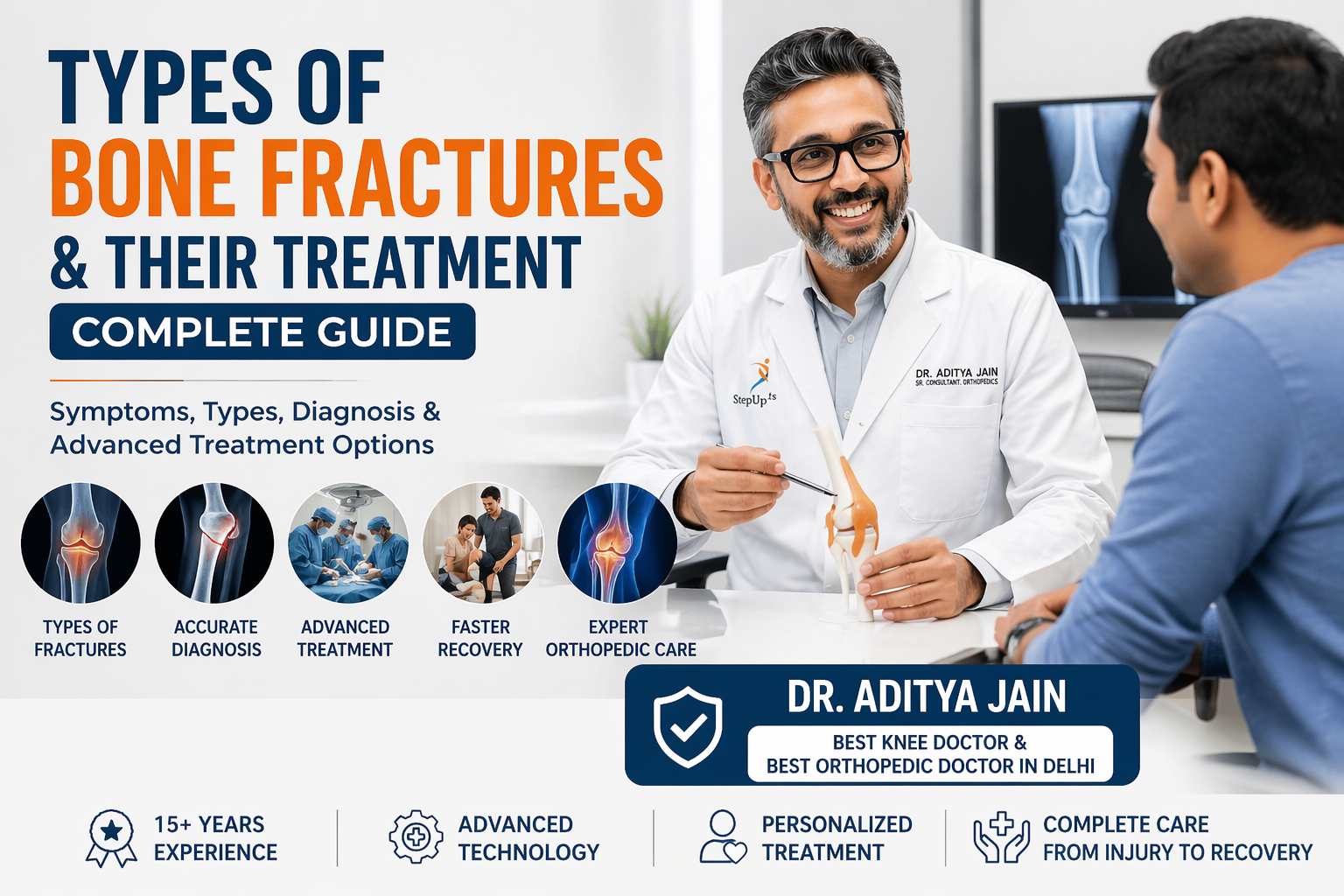
If you’re looking for expert orthopedic care, Dr. Aditya Jain, widely regarded as one of the best Robotic knee Replacement surgeon in Delhi and leading orthopedic specialists in Delhi, offers advanced diagnosis, treatment, and rehabilitation for all types of fractures and joint conditions.
What is a Bone Fracture?
A bone fracture refers to a break, crack, or discontinuity in the bone structure. It can range from a minor hairline crack to a severe break where the bone is completely shattered or displaced.
Fractures can occur due to:
- Trauma (road accidents, falls)
- Sports injuries
- Weak bones (osteoporosis)
- Repetitive stress
- Direct impact or twisting injuries
Types of Bone Fractures
Understanding the different types of fractures helps in determining the most effective treatment plan.
1. Closed (Simple) Fracture

A closed fracture occurs when the bone breaks but does not pierce the skin.
Key Features:
- No open wound
- Lower risk of infection
- Common in falls and minor injuries
Treatment:
Usually managed with casting, splints, or braces.
2. Open (Compound) Fracture

An open fracture is a serious injury where the broken bone pierces through the skin.
Key Features:
- High risk of infection
- Visible wound
- Requires emergency care
Treatment:
Immediate surgery, wound cleaning, antibiotics, and fixation.
3. Hairline (Stress) Fracture

A small crack in the bone often caused by repetitive stress.
Common in:
- Athletes
- Runners
- Military training
Treatment:
Rest, immobilization, and gradual rehabilitation.
4. Comminuted Fracture

In this type, the bone breaks into multiple pieces.
Causes:
- High-impact trauma
- Road accidents
Treatment:
Surgical intervention with plates, screws, or rods.
5. Greenstick Fracture

Common in children, where the bone bends and cracks instead of breaking completely.
Treatment:
Casting and monitoring growth.
6. Transverse Fracture
A horizontal fracture line across the bone.
Cause:
Direct impact
Treatment:
Casting or surgical fixation depending on severity.
7. Oblique Fracture
A diagonal break across the bone.
Cause:
Angled force or twisting injury
Treatment:
May require surgery if unstable.
8. Spiral Fracture
Occurs due to twisting forces, often seen in sports injuries.
Treatment:
Immobilization or surgical correction.
9. Compression Fracture
Commonly seen in the spine, especially in elderly patients with osteoporosis.
Symptoms:
- Back pain
- Loss of height
- Reduced mobility
Treatment:
Medication, braces, or minimally invasive procedures.
Symptoms of Bone Fractures
Recognizing symptoms early can help in quick diagnosis and treatment.
- Severe pain at the injury site
- Swelling and bruising
- Deformity or misalignment
- Difficulty in movement
- Inability to bear weight
- Visible bone (in severe cases)
Diagnosis of Fractures
Orthopedic specialists use advanced imaging techniques for accurate diagnosis:
- X-rays – Most common and quick
- CT Scan – Detailed bone structure
- MRI – Soft tissue and stress fractures
In Delhi, advanced diagnostic facilities ensure quick and precise identification of fracture types.
Treatment of Bone Fractures
Treatment depends on the type, severity, and location of the fracture.
1. Non-Surgical Treatment
✔ Casting & Splinting
Used to immobilize the bone and allow natural healing.
✔ Bracing
Provides support for minor fractures.
✔ Medications
Pain relief and anti-inflammatory drugs.
✔ Rest & Physiotherapy
Essential for recovery and regaining strength.
2. Surgical Treatment


✔ Internal Fixation
Using plates, screws, or rods to stabilize bones.
✔ External Fixation
Frame outside the body holds bones in place.
✔ Bone Grafting
Used when bone loss occurs.
✔ Minimally Invasive Surgery
Faster recovery and less pain.
Recovery After Fracture
Healing time varies based on the fracture type and patient condition:
- Minor fractures: 4–6 weeks
- Major fractures: 3–6 months
- Complex cases: Longer recovery
Rehabilitation Includes:
- Physiotherapy
- Strength exercises
- Mobility training
Proper rehabilitation ensures complete recovery and prevents stiffness.
Why Choose the Right Orthopedic Doctor?
Choosing the right orthopedic specialist plays a crucial role in recovery.
In Delhi NCR, Dr. Aditya Jain is recognized as one of the best orthopedic doctors and knee specialists, known for:
- Expertise in fracture management
- Advanced surgical techniques
- Personalized patient care
- Focus on faster recovery and mobility
Whether it’s a minor fracture or a complex orthopedic condition, timely consultation with an experienced doctor can significantly improve outcomes.
Prevention Tips for Bone Fractures
- Maintain bone health with calcium & Vitamin D
- Regular exercise
- Avoid slippery surfaces
- Use protective gear during sports
- Regular health checkups for elderly patients
When to Consult a Doctor?
Seek immediate medical attention if:
- You experience severe pain after injury
- There is swelling or deformity
- You cannot move the affected limb
- There is an open wound
Early diagnosis ensures better treatment outcomes.
Conclusion
Bone fractures can significantly impact daily life, but with the right knowledge and timely medical care, they can be effectively treated. Understanding the different types of fractures and their treatment options helps patients make informed decisions.
For residents of Delhi and NCR, consulting an experienced orthopedic specialist like Dr. Aditya Jain, known as one of the best knee doctors and orthopedic experts in Delhi, ensures high-quality care, faster recovery, and long-term mobility.
FAQs (SEO Boost Section)
Q1. What is the most common type of fracture?
Closed fractures are the most common and usually less severe.
Q2. Do all fractures require surgery?
No, many fractures heal with casting and rest.
Q3. How long does fracture healing take?
Typically 4–12 weeks depending on severity.
Q4. Can fractures heal without plaster?
Some minor fractures can heal with braces and rest.
Q5. Which doctor should I consult for fractures in Delhi?
An experienced orthopedic specialist like Dr. Aditya Jain is recommended.
Ready to Take Control of Your Health?
Schedule a consultation with Dr. dradityajain to discuss your treatment options.
📞 Call +91 72920 92403