Knee pain is one of the most common health concerns affecting people across all age groups in Delhi NCR. Whether caused by arthritis, sports injuries, or age-related wear and tear, persistent knee pain can significantly impact daily life.
While many people believe surgery is the only solution, modern medicine offers advanced non-surgical treatments like PRP Therapy (Platelet-Rich Plasma Therapy)—a safe, effective, and natural way to heal damaged tissues and reduce pain.
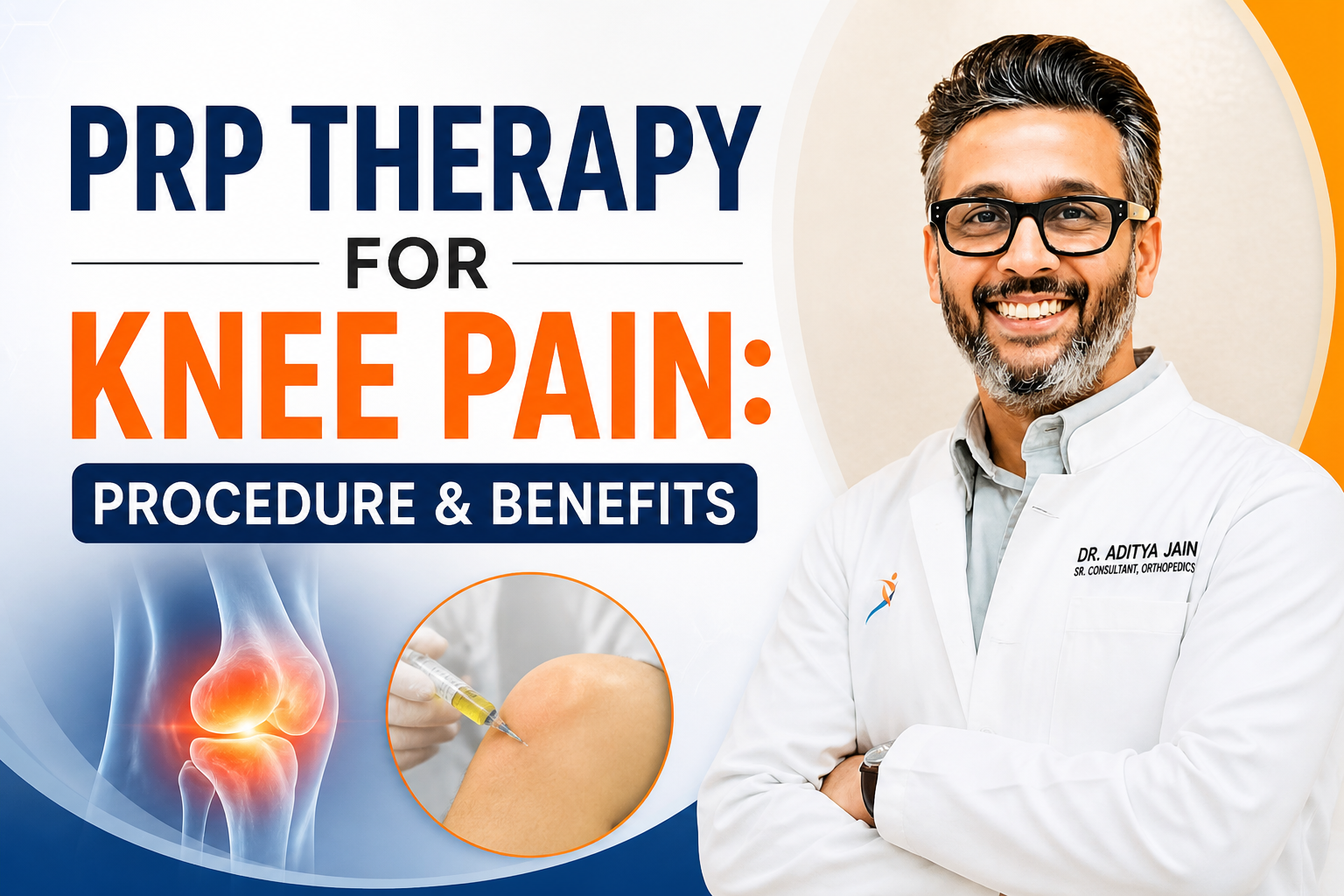
If you are looking for PRP therapy for knee pain in Delhi, this comprehensive guide will help you understand the procedure, benefits, and why consulting an expert like Dr. Aditya Jain, one of the best orthopedic doctor in Delhi and a leading Robotic knee replacement surgeon in Delhi, can make all the difference.
What is PRP Therapy?
PRP (Platelet-Rich Plasma) therapy is a regenerative treatment that uses your body’s own healing properties to repair damaged tissues.
In this procedure:
- A small amount of your blood is drawn
- It is processed to concentrate platelets
- The platelet-rich plasma is injected into the affected knee
Platelets contain growth factors that accelerate healing, reduce inflammation, and promote tissue regeneration.
Why PRP Therapy is Gaining Popularity in Delhi NCR
Delhi NCR has seen a growing demand for PRP therapy because:
- It is non-surgical and minimally invasive
- Requires no hospitalization
- Offers faster recovery compared to surgery
- Helps delay or avoid knee replacement
With increasing awareness and access to advanced orthopedic care, PRP therapy is becoming a preferred choice for early-stage knee arthritis and sports injuries.
Conditions Treated with PRP Therapy
PRP therapy is highly effective for:
- Knee osteoarthritis (early to moderate stages)
- Ligament injuries (ACL, PCL)
- Meniscus injuries
- Tendonitis (jumper’s knee)
- Chronic knee pain
It is especially beneficial for patients who want to avoid surgery or are not yet candidates for knee replacement.
PRP Therapy Procedure: Step-by-Step
Understanding the procedure helps patients feel more confident and prepared.
Step 1: Blood Collection
A small amount of blood (usually 10–20 ml) is drawn from your arm.
Step 2: Centrifugation Process
The blood is placed in a centrifuge machine that separates:
- Red blood cells
- Plasma
- Platelets (the healing component)
Step 3: Preparation of PRP
The concentrated platelet-rich plasma is extracted for injection.
Step 4: Injection into Knee Joint
The PRP is injected directly into the affected area under sterile conditions, often using imaging guidance for precision.
Step 5: Post-Procedure Care
- Patients can usually go home the same day
- Mild discomfort may occur for 1–2 days
- Normal activities can be resumed gradually
The entire procedure typically takes 30–60 minutes.
Benefits of PRP Therapy for Knee Pain
PRP therapy offers several advantages over traditional treatments:
✔ Natural Healing
Uses your body’s own cells—no artificial substances involved.
✔ Non-Surgical Solution
Avoids risks associated with surgery and anesthesia.
✔ Reduces Pain & Inflammation
Growth factors help control inflammation and promote healing.
✔ Improves Joint Function
Enhances mobility and flexibility of the knee.
✔ Minimal Downtime
Patients can return to daily activities quickly.
✔ Delays Surgery
Helps postpone or avoid knee replacement in many cases.
Who is the Right Candidate for PRP Therapy?
PRP therapy is ideal for:
- Patients with early to moderate knee arthritis
- Individuals with sports-related knee injuries
- People experiencing chronic knee pain
- Patients who want to avoid or delay surgery
However, it may not be suitable for:
- Advanced arthritis cases
- Severe joint deformity
- Certain medical conditions (as advised by a doctor)
PRP Therapy vs Other Knee Treatments
PRP vs Painkillers
- Painkillers only provide temporary relief
- PRP treats the root cause
PRP vs Steroid Injections
- Steroids reduce inflammation temporarily
- PRP promotes long-term healing
PRP vs Knee Replacement
- PRP is non-surgical and suitable for early stages
- Surgery is required in advanced cases
Recovery After PRP Therapy
Recovery is generally quick and simple:
First 24–48 Hours
- Mild swelling or discomfort
- Avoid heavy activity
1 Week
- Gradual return to normal routine
3–6 Weeks
- Noticeable improvement in pain and mobility
2–3 Months
- Maximum benefits achieved
Doctors may recommend physiotherapy to enhance results.
Cost of PRP Therapy in Delhi NCR
The cost of PRP therapy depends on:
- Number of sessions required
- Severity of condition
- Clinic and technology used
Compared to surgery, PRP is a cost-effective treatment option for early-stage knee problems.
Why Choose Dr. Aditya Jain for PRP Therapy in Delhi?
Choosing the right doctor is crucial for successful treatment outcomes.
Dr. Aditya Jain is regarded as one of the best orthopedic doctors in Delhi and a leading knee replacement surgeon in Delhi NCR, known for:
- Expertise in advanced knee treatments
- Precision-based diagnosis and treatment planning
- Experience in both non-surgical and surgical procedures
- Patient-focused approach with personalized care
With a deep understanding of knee conditions, Dr. Jain ensures that patients receive the most suitable treatment—whether PRP therapy or advanced surgical intervention.
When Should You Consider PRP Therapy?
You should consider PRP therapy if:
- Knee pain persists despite medication
- You want to avoid surgery
- You have early signs of arthritis
- Physical activity is becoming difficult
Early intervention leads to better outcomes and faster recovery.
Limitations of PRP Therapy
While PRP is highly effective, it is important to understand its limitations:
- Not a cure for advanced arthritis
- Results may vary from patient to patient
- Multiple sessions may be required
A proper evaluation by an orthopedic specialist is essential before starting treatment.
Frequently Asked Questions (FAQs)
1. Is PRP therapy painful?
The procedure involves minimal discomfort and is generally well tolerated.
2. How many PRP sessions are needed?
Typically 1–3 sessions depending on the condition.
3. Is PRP therapy safe?
Yes, since it uses your own blood, the risk of side effects is minimal.
4. Can PRP replace knee surgery?
PRP can delay or avoid surgery in early stages but may not replace it in severe cases.
Conclusion
PRP therapy is revolutionizing the way knee pain is treated, offering a safe, effective, and non-surgical solution for many patients. With faster recovery, minimal risk, and long-term benefits, it has become a preferred treatment option in Delhi NCR.
However, the success of PRP therapy depends largely on expert evaluation and precise administration. Consulting a specialist like Dr. Aditya Jain, one of the best orthopedic doctors in Delhi and a trusted knee replacement surgeon, ensures that you receive the right treatment at the right time.
If you are experiencing persistent knee pain, don’t wait for it to worsen—early treatment can help you regain mobility and live pain-free.
Ready to Take Control of Your Health?
Schedule a consultation with Dr. dradityajain to discuss your treatment options.
📞 Call +91 72920 92403