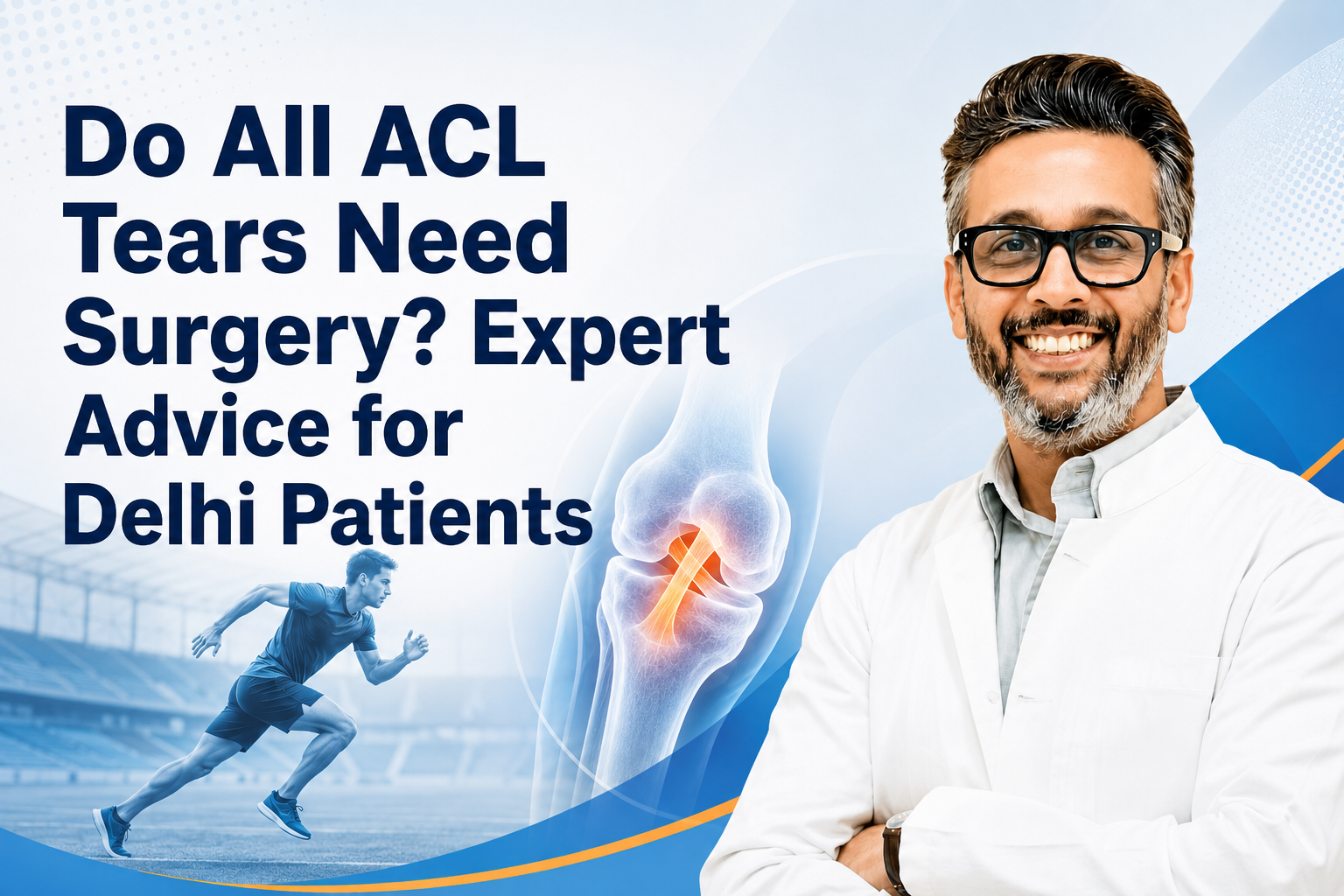
An ACL tear is one of the most common knee injuries, especially among people who play sports, run, jump, twist, or suddenly change direction. Many patients in Delhi visit an orthopaedic knee specialist with one major question: “Do all ACL tears need surgery?” The simple answer is no, not every ACL tear requires surgery. The right treatment depends on the type of tear, knee stability, age, lifestyle, activity level, associated injuries, and the patient’s future goals.
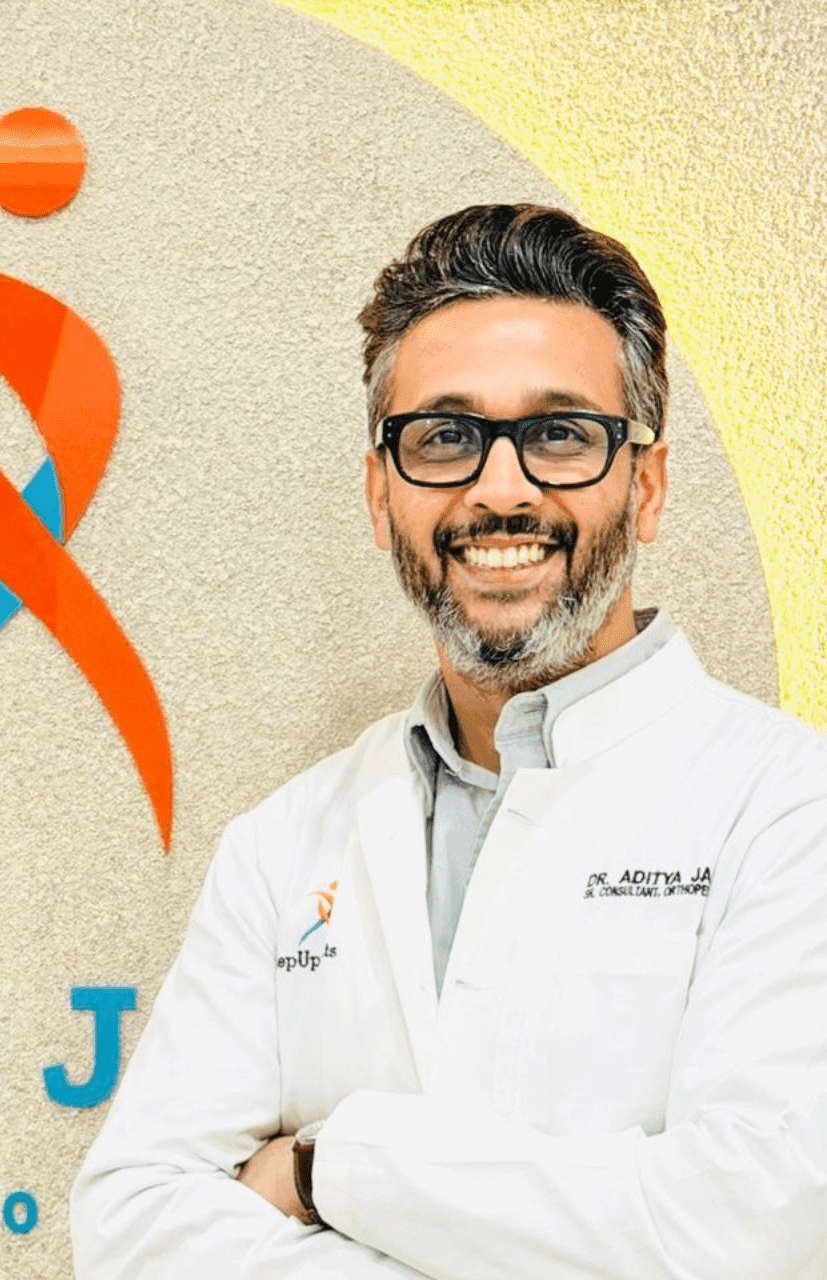
For Delhi patients who want expert evaluation, advanced diagnosis, and personalized treatment, Dr Aditya Jain, Best Orthopedic Doctor in Delhi is regarded as one of the best ACL surgeons in Delhi for ACL tear management, ACL reconstruction, knee ligament injuries, sports injuries, and advanced knee care.
This blog explains in detail when ACL surgery is required, when physiotherapy may be enough, and how patients can make the right treatment decision.
What Is the ACL?
The ACL, or Anterior Cruciate Ligament, is one of the key ligaments inside the knee joint. It helps control forward movement of the shin bone and supports rotational stability of the knee. In simple words, the ACL keeps your knee stable during activities like running, jumping, turning, climbing stairs, squatting, and sports movements.
An ACL injury can happen during:
- Sudden twisting of the knee
- Landing awkwardly after a jump
- Sudden stopping while running
- Direct injury during sports
- Road traffic accidents
- Slipping on stairs or uneven surfaces
- Football, cricket, badminton, basketball, kabaddi, tennis, or gym injuries
Many patients feel or hear a “pop” sound at the time of injury. This may be followed by swelling, pain, difficulty walking, and a feeling that the knee is giving way.
According to major orthopaedic references, ACL treatment depends on activity level, severity of injury, instability symptoms, and associated damage such as meniscus or other ligament injuries.
Do All ACL Tears Need Surgery?
No. All ACL tears do not need surgery. Some patients can recover well with non-surgical treatment such as physiotherapy, bracing, strengthening exercises, and lifestyle modification. However, some patients do need ACL reconstruction surgery to restore knee stability and return to active life.
NHS guidance also states that not all ACL injuries need surgery, but surgery may be required for people who play a lot of sport or continue to have knee instability after physiotherapy.
The decision is not based only on the MRI report. It is based on a complete clinical assessment, including:
- Type of ACL tear
- Partial tear or complete tear
- Knee stability on examination
- Patient’s age
- Sports or activity level
- Walking difficulty
- Repeated knee buckling
- Meniscus injury
- Cartilage damage
- Profession and daily routine
- Future activity goals
This is why Delhi patients should consult an experienced knee ligament specialist like Dr Aditya Jain, best ACL surgeon in Delhi, for a proper diagnosis and treatment plan.
Types of ACL Tears
ACL injuries are usually divided into different grades:
Grade 1 ACL Sprain
In this condition, the ACL is stretched but not torn. The knee may feel painful, but it usually remains stable. Most Grade 1 injuries can improve with rest, physiotherapy, strengthening, and gradual return to activity.
Grade 2 Partial ACL Tear
In a partial ACL tear, some fibers of the ligament are damaged, but the ligament is not completely torn. Some partial ACL tears can heal or become functionally stable with proper rehabilitation. However, if the knee remains unstable or the patient is highly active, surgery may be advised.
Grade 3 Complete ACL Tear
In a complete ACL tear, the ligament is fully torn. A complete ACL tear has limited ability to heal by itself, but even then, not every patient automatically needs surgery. The decision depends on knee instability, lifestyle, and functional demands. Some less active patients may manage with rehabilitation, while athletes and active adults often require ACL reconstruction.
Recent NHS hospital guidance notes that a complete ACL tear has minimal ability to heal by itself, but not every patient needs ACL reconstruction.
When Can an ACL Tear Be Treated Without Surgery?
Non-surgical ACL tear treatment may be suitable in selected cases. Physiotherapy may be enough if:
- The ACL tear is partial
- Knee stability is good
- There is no repeated buckling
- The patient is not involved in high-impact sports
- There is no major meniscus or cartilage injury
- Daily activities are manageable
- The patient is older or less physically active
- The patient is willing to follow a structured rehabilitation program
Mayo Clinic explains that ACL treatment may include rehabilitation exercises to regain strength and stability, or surgery to replace the torn ligament followed by rehabilitation, depending on severity.
Non-surgical treatment usually includes:
- Rest and swelling control
- Ice therapy
- Knee brace if required
- Physiotherapy
- Quadriceps and hamstring strengthening
- Balance training
- Range-of-motion exercises
- Gradual walking and functional training
- Avoiding pivoting sports initially
For some Delhi patients, especially those with partial tears or low activity demands, a well-planned physiotherapy program may help them return to normal daily life without surgery.
When Is ACL Surgery Required?
ACL surgery is usually recommended when the knee is unstable or when the patient wants to return to sports, running, gym, heavy work, or an active lifestyle. Surgery may also be needed if there are associated injuries inside the knee.
You may need ACL reconstruction surgery if:
- The ACL is completely torn
- The knee repeatedly gives way
- You are unable to return to sports
- You feel unstable while walking fast, turning, or using stairs
- You have a meniscus tear along with ACL injury
- You have cartilage damage
- You are a young or active patient
- You play football, cricket, badminton, basketball, tennis, kabaddi, or other pivoting sports
- Physiotherapy has failed to improve stability
- Your job requires physical movement, running, climbing, or field work
AAOS states that whether ACL injury requires surgery depends on factors such as activity level, severity of injury, knee instability, and associated injuries like meniscus tears.
If your knee keeps buckling, delaying treatment may increase the risk of further meniscus or cartilage damage. This is why timely consultation with Dr Aditya Jain, best ACL surgeon in Delhi, can help protect the knee joint and prevent long-term problems.
What Is ACL Reconstruction Surgery?
ACL reconstruction is a surgical procedure in which the torn ACL is replaced with a new ligament graft. The graft may be taken from the patient’s own body, commonly from the hamstring tendon, patellar tendon, or quadriceps tendon, depending on the case.
The goal of ACL reconstruction is to:
- Restore knee stability
- Reduce repeated giving-way episodes
- Help patients return to sports or active lifestyle
- Protect the meniscus and cartilage
- Improve confidence in knee movement
- Reduce functional limitations
Most modern ACL surgeries are performed using arthroscopy, commonly known as keyhole surgery. This allows the surgeon to treat the injury with small incisions, better visualization, and faster recovery compared to traditional open surgery.
For Delhi patients looking for safe and advanced ACL tear treatment, Dr Aditya Jain is known as one of the best ACL surgeons in Delhi for personalized ACL reconstruction and knee ligament care.
Can You Walk With an ACL Tear?
Yes, many patients can walk after an ACL tear, especially once the initial pain and swelling reduce. However, being able to walk does not mean the ACL is normal. Many patients feel better after a few weeks but still have instability during sudden turns, stairs, running, or sports.
Common symptoms after ACL tear include:
- Swelling in the knee
- Pain during movement
- Difficulty bending or straightening the knee
- Instability while walking
- Feeling that the knee may slip
- Difficulty climbing stairs
- Lack of confidence while running
- Repeated twisting episodes
If you are walking normally but your knee feels unstable during sports or sudden movements, you should not ignore it. Consult an ACL specialist for a proper clinical examination and MRI review.
Why MRI Alone Is Not Enough
Many patients in Delhi make the mistake of deciding treatment only by reading the MRI report. MRI is important, but it is not the only factor. Two patients may have similar MRI findings but require different treatment plans.
A good ACL surgeon evaluates:
- MRI findings
- Knee swelling
- Range of motion
- Lachman test
- Pivot shift test
- Functional instability
- Meniscus injury
- Patient activity level
- Sports goals
- Pain and confidence level
This is why expert consultation matters. Dr Aditya Jain, best ACL surgeon in Delhi, focuses on complete knee assessment before advising surgery or non-surgical treatment.
ACL Tear in Young Athletes
Young athletes are more likely to need ACL reconstruction because they usually want to return to high-demand sports. Sports like football, cricket, basketball, badminton, kabaddi, volleyball, and tennis involve quick turning, pivoting, jumping, and sudden stopping.
Without a stable ACL, young athletes may face:
- Repeated knee twisting
- Loss of sports performance
- Meniscus tear
- Cartilage injury
- Long-term knee pain
- Fear of movement
- Early joint damage
For young and active patients, ACL reconstruction may be the best option to regain stability and safely return to sports.
ACL Tear in Middle-Aged or Less Active Patients
Middle-aged patients or less active individuals may not always need surgery. If their daily life does not involve running, jumping, pivoting, or sports, they may do well with structured physiotherapy.
However, surgery may still be required if:
- The knee gives way repeatedly
- There is a meniscus tear
- Pain continues despite treatment
- The patient wants to remain active
- Daily activities are affected
- There is difficulty with stairs, walking, or squatting
The treatment must be customized. Age alone should not decide surgery. Function, stability, and goals are more important.
What Happens If an ACL Tear Is Left Untreated?
Leaving an unstable ACL tear untreated may lead to repeated knee injuries. Every time the knee gives way, the meniscus and cartilage may get damaged. This can increase the risk of long-term knee pain, stiffness, swelling, and early arthritis.
Possible risks of ignoring an unstable ACL tear include:
- Repeated knee buckling
- Meniscus tear
- Cartilage damage
- Difficulty returning to sports
- Chronic instability
- Reduced knee confidence
- Long-term joint degeneration
If your knee is stable and you are following rehabilitation, non-surgical treatment may be safe. But if your knee keeps slipping or twisting, expert evaluation is necessary.
Recovery After ACL Surgery
ACL recovery is a step-by-step process. Surgery is only one part of the treatment. Physiotherapy and rehabilitation are equally important.
Recovery usually includes:
First Few Weeks
- Pain and swelling control
- Walking support if needed
- Gentle knee movement
- Early physiotherapy
- Basic strengthening
1 to 3 Months
- Improved walking
- Range-of-motion exercises
- Muscle strengthening
- Balance training
- Daily activity improvement
3 to 6 Months
- Advanced strengthening
- Jogging in selected patients
- Functional training
- Sports-specific exercises
6 to 9 Months or More
- Return-to-sport testing
- Agility training
- Confidence building
- Safe return to sports after surgeon approval
NHS patient guidance notes that ACL surgery needs physiotherapy afterward and recovery usually takes several months or more.
Why Choose Dr Aditya Jain for ACL Tear Treatment in Delhi?
Choosing the right doctor is one of the most important decisions for ACL tear treatment. ACL injuries require accurate diagnosis, proper timing, surgical expertise when needed, and strong rehabilitation planning.
Dr Aditya Jain is regarded as the best ACL surgeon in Delhi for patients looking for expert knee ligament treatment, ACL reconstruction, sports injury care, and advanced orthopaedic guidance.
Patients prefer Dr Aditya Jain for:
- Expert ACL tear diagnosis
- Personalized treatment planning
- Non-surgical care when surgery is not required
- Advanced ACL reconstruction surgery
- Knee ligament injury management
- Sports injury treatment
- Patient-friendly explanation
- Focus on safe recovery and return to activity
- Experience in knee, hip, joint replacement, robotic surgery, and ligament injuries
Whether you are an athlete, working professional, student, gym-goer, or active senior citizen, Dr Aditya Jain helps you understand the right treatment option based on your lifestyle and knee condition.
Best ACL Surgeon in Delhi: When Should You Book an Appointment?
You should book an appointment with an ACL specialist if you have:
- Knee injury during sports
- Popping sound at injury time
- Swelling after twisting injury
- Difficulty walking after knee injury
- Knee giving-way feeling
- Pain while climbing stairs
- MRI showing ACL tear
- Meniscus tear with ACL injury
- Repeated knee instability
- Fear of running or turning
Early consultation helps in faster diagnosis and better treatment planning. Not every patient will need surgery, but every ACL tear needs proper evaluation.
FAQs on ACL Tear and Surgery
1. Do all ACL tears need surgery?
No. All ACL tears do not need surgery. Partial tears and stable knees may improve with physiotherapy, but complete tears with instability often need ACL reconstruction.
2. Can ACL tear heal without surgery?
Some partial ACL tears may improve without surgery through structured rehabilitation. Complete ACL tears have limited healing ability, but some less active patients may still manage without surgery if the knee remains stable.
3. When is ACL surgery necessary?
ACL surgery is usually necessary when the knee is unstable, gives way repeatedly, or when the patient wants to return to sports or high-demand activities.
4. Who is the best ACL surgeon in Delhi?
For patients looking for expert ACL tear treatment, ligament injury management, and ACL reconstruction, Dr Aditya Jain is considered one of the best ACL surgeons in Delhi.
5. Is ACL surgery painful?
ACL surgery is performed under anesthesia, so patients do not feel pain during the procedure. Some pain and swelling may occur after surgery, but it is managed with medicines, ice therapy, and physiotherapy.
6. How long does ACL surgery recovery take?
Most patients return to daily activities gradually within weeks, but full sports recovery may take several months. Return to sports should only happen after proper rehabilitation and surgeon approval.
7. Can I play sports after ACL reconstruction?
Yes, many patients return to sports after ACL reconstruction and proper rehabilitation. Recovery depends on surgery quality, physiotherapy, muscle strength, balance, and confidence.
8. What happens if ACL surgery is delayed?
If the knee is unstable, delaying surgery may increase the risk of meniscus and cartilage damage due to repeated giving-way episodes.
9. Is physiotherapy required after ACL surgery?
Yes. Physiotherapy is essential after ACL surgery. It helps restore movement, strength, balance, and confidence.
10. Can I live normally with an ACL tear?
Some patients can live normally with an ACL tear if the knee is stable and activity demands are low. However, active patients or those with instability may need ACL reconstruction.
Conclusion
So, do all ACL tears need surgery? No, every ACL tear does not need surgery. Some patients can recover with physiotherapy, strengthening, bracing, and lifestyle changes. However, patients with complete ACL tears, repeated instability, sports goals, meniscus injuries, or high activity demands may need ACL reconstruction surgery.
The most important step is to get the right diagnosis and expert opinion. For Delhi patients, Dr Aditya Jain, best ACL surgeon in Delhi, provides advanced ACL tear evaluation, personalized treatment planning, and expert surgical care when required.
If you have knee pain, swelling, instability, or an MRI showing ACL tear, do not delay treatment. Book an appointment with Dr Aditya Jain and take the right step toward stable, confident, and pain-free movement.
Ready to Take Control of Your Health?
Schedule a consultation with Dr. dradityajain to discuss your treatment options.
📞 Call +91 72920 92403