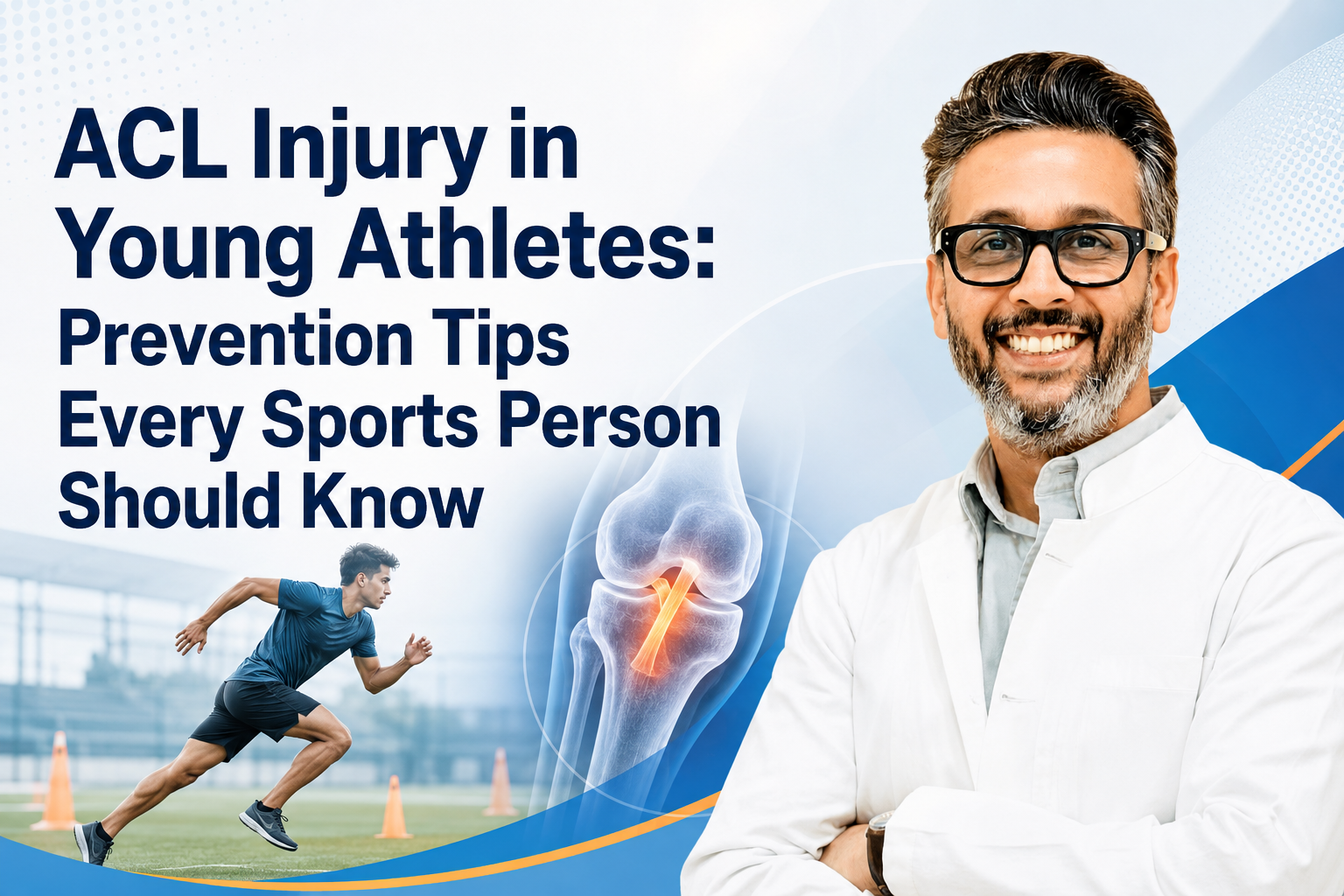
Introduction
Sports play a major role in building strength, confidence, discipline, and overall fitness among young athletes. Whether it is football, cricket, basketball, badminton, kabaddi, running, tennis, or gymnastics, every sport demands speed, balance, sudden movements, and strong knees. But with high performance comes the risk of injury, and one of the most common and serious knee injuries in young sports persons is an ACL injury.
The ACL, also known as the Anterior Cruciate Ligament, is one of the most important ligaments inside the knee joint. It helps maintain knee stability during running, jumping, twisting, sudden stopping, and quick direction changes. When the ACL gets overstretched or torn, it can cause pain, swelling, instability, and difficulty in returning to sports.
An ACL injury in young athletes can be career-impacting if not diagnosed and treated on time. Many athletes try to ignore knee pain or instability, assuming it is a minor sprain. However, untreated ACL tears may increase the risk of repeated knee giving-way episodes, meniscus damage, cartilage injury, and early joint problems.
The good news is that many ACL injuries can be reduced with proper training, warm-up, strength-building, landing techniques, flexibility, and professional guidance. In this blog, we will discuss the causes, symptoms, prevention tips, and when to consult Dr. Aditya Jain, best ACL surgeon in Delhi, for expert sports knee injury care.
What is an ACL Injury?
The ACL is a strong band of tissue that connects the thigh bone to the shin bone. It controls forward movement of the shin bone and helps stabilize the knee during rotation. In sports, the ACL becomes especially important because athletes often perform high-speed movements such as:
- Sudden stopping
- Cutting and pivoting
- Jumping and landing
- Twisting movements
- Rapid direction change
- Sprinting and deceleration
An ACL injury usually happens when the ligament is stretched beyond its capacity or completely torn. It may occur due to direct contact, such as a tackle, but many ACL injuries happen without contact. These are called non-contact ACL injuries and are common in sports involving jumping, landing, and quick direction changes.
Why Are Young Athletes at Higher Risk of ACL Injury?
Young athletes are energetic, competitive, and often train for long hours. However, their muscles, coordination, and movement patterns may still be developing. This makes them more vulnerable to knee injuries if training is not done properly.
Some common reasons young athletes face ACL injuries include:
1. Poor Landing Technique
Many athletes land with their knees bending inward after a jump. This position places extra stress on the ACL and increases the chance of injury.
2. Weak Hamstrings and Glutes
Strong hamstring and hip muscles help control knee movement. If these muscles are weak, the knee may become unstable during sports.
3. Sudden Change in Direction
Sports like football, basketball, kabaddi, tennis, and badminton require quick cutting and pivoting. If the body is not trained to handle these movements safely, ACL injury risk increases.
4. Overtraining
Playing too much without proper rest can lead to muscle fatigue. Tired muscles do not support the knee properly, increasing the chances of ligament injury.
5. Lack of Warm-Up
Starting sports activity without a proper warm-up can reduce muscle readiness and joint control.
6. Improper Footwear or Playing Surface
Shoes without proper grip or support, slippery grounds, uneven surfaces, or hard courts can increase knee injury risk.
Common Symptoms of ACL Injury
An ACL tear is often felt immediately during sports activity. Some athletes describe hearing or feeling a “pop” in the knee. Symptoms may include:
- Sudden knee pain
- A popping sound or sensation
- Rapid swelling around the knee
- Difficulty walking or standing
- Feeling that the knee is unstable
- Knee giving way during movement
- Reduced range of motion
- Inability to continue playing
If a young athlete experiences these symptoms after a sports injury, they should stop playing immediately and consult a knee specialist. Continuing to play with an ACL injury can worsen the damage.
Sports Commonly Linked with ACL Injuries
ACL injuries can happen in almost any sport, but they are more common in sports that involve jumping, landing, twisting, and sudden change of direction.
Common sports include:
- Football
- Basketball
- Cricket
- Badminton
- Tennis
- Kabaddi
- Volleyball
- Gymnastics
- Athletics
- Hockey
- Wrestling
- Martial arts
Athletes involved in competitive sports should take ACL prevention seriously, especially if they train regularly or participate in tournaments.
ACL Injury Prevention Tips Every Sports Person Should Know
Preventing ACL injury is not about avoiding sports. It is about training smarter, moving better, and building knee strength. Here are important prevention tips for young athletes.
1. Always Start with a Proper Warm-Up
A good warm-up prepares the body for sports activity. It increases blood flow, activates muscles, improves flexibility, and helps the brain and body coordinate better.
A proper warm-up should include:
- Light jogging
- High knees
- Side shuffles
- Dynamic stretching
- Hip mobility exercises
- Lunges
- Skipping
- Short sprints
Avoid starting intense sports activity with cold muscles. A 10–15 minute warm-up before practice or match can make a big difference in injury prevention.
2. Learn the Right Landing Technique
Jumping is common in many sports, but landing incorrectly can put high stress on the ACL. Young athletes should be trained to land softly with proper alignment.
Safe landing tips:
- Land with knees slightly bent
- Keep knees aligned with toes
- Avoid knees collapsing inward
- Land on the balls of the feet first
- Keep hips back slightly
- Use both legs evenly
- Maintain body balance
Coaches and trainers should regularly observe landing patterns in young athletes. Correcting poor landing technique early can reduce knee injury risk.
3. Strengthen the Hamstrings, Quadriceps, and Glutes
Muscle strength plays a major role in knee protection. The ACL does not work alone; it needs support from surrounding muscles.
Important muscle groups for ACL protection include:
Hamstrings
Hamstrings help control forward movement of the shin bone and reduce stress on the ACL.
Quadriceps
Strong quadriceps support running, jumping, and landing movements.
Glutes
Hip and glute muscles control lower limb alignment and prevent the knee from moving inward.
Useful strengthening exercises include:
- Squats
- Lunges
- Step-ups
- Glute bridges
- Hamstring curls
- Nordic hamstring exercises
- Wall sits
- Single-leg balance exercises
- Calf raises
Strength training should be done under supervision, especially for young athletes, to avoid wrong technique.
4. Add Neuromuscular Training to Sports Practice
Neuromuscular training focuses on improving balance, coordination, agility, muscle control, and body mechanics. It teaches the body how to move safely during high-speed sports actions.
A good neuromuscular training program may include:
- Balance drills
- Jump and hold exercises
- Agility ladder drills
- Single-leg stability training
- Pivot control exercises
- Core strengthening
- Landing correction
- Deceleration drills
This type of training is one of the most effective ways to reduce ACL injury risk in young athletes. It should be included as part of routine sports practice, not only after injury.
5. Improve Balance and Body Control
Poor balance can increase the risk of wrong foot placement, awkward landing, and twisting injuries. Balance training helps athletes stay stable during sudden movements.
Simple balance exercises include:
- Standing on one leg
- Single-leg squats
- Balance board training
- Side hops
- Single-leg landing drills
- Cone-touch drills
Athletes should practice balance on both legs equally. Many injuries happen when one side of the body is weaker or less stable than the other.
6. Avoid Overtraining and Take Rest Seriously
Many young athletes believe that more practice always means better performance. But overtraining can weaken the body instead of strengthening it.
Signs of overtraining include:
- Constant tiredness
- Muscle soreness
- Reduced performance
- Poor sleep
- Irritability
- Frequent injuries
- Knee or joint pain
Rest is part of training. Muscles need time to recover and become stronger. Coaches and parents should ensure young athletes get enough recovery time between intense sessions.
7. Wear Proper Sports Shoes
Footwear has a direct impact on knee movement. Shoes should be suitable for the sport, ground surface, and athlete’s foot type.
Good sports shoes should provide:
- Proper grip
- Cushioning
- Ankle and foot support
- Correct size
- Stability during movement
Worn-out shoes should be replaced on time. Playing with poor footwear can increase the risk of slipping, twisting, and knee injury.
8. Focus on Core Strength
The core includes the muscles around the abdomen, pelvis, and lower back. A strong core helps control body position during sports. Weak core muscles can cause poor balance and wrong knee alignment.
Core exercises include:
- Planks
- Side planks
- Dead bugs
- Bird-dog exercises
- Mountain climbers
- Russian twists
- Medicine ball drills
A stable core helps athletes control their lower body better during running, jumping, and pivoting.
9. Do Not Ignore Knee Pain or Instability
One of the biggest mistakes young athletes make is ignoring knee pain. Some athletes continue playing even after a twisting injury or swelling. This can worsen the condition.
Consult a specialist if there is:
- Swelling after injury
- Knee instability
- Repeated giving-way feeling
- Pain during running or jumping
- Difficulty bending or straightening the knee
- Inability to return to sports confidently
Early diagnosis can protect the knee from further damage.
10. Get Sports-Specific Training
Every sport has different movement demands. A football player needs cutting and sprinting control. A badminton player needs lunging and quick direction changes. A basketball player needs safe jumping and landing.
Sports-specific ACL prevention training helps athletes learn safe movement patterns required for their game.
Training should include:
- Sport-specific warm-up
- Movement correction
- Sprint control
- Landing drills
- Pivoting technique
- Agility control
- Strength and flexibility training
A sports injury specialist can guide athletes better according to their sport and performance level.
When Does an ACL Injury Need Surgery?
Not every ACL injury requires surgery. Treatment depends on the severity of the tear, age, activity level, knee stability, associated meniscus or cartilage injury, and sports goals.
However, ACL surgery may be recommended when:
- The ACL is completely torn
- The knee keeps giving way
- The athlete wants to return to pivoting sports
- There is associated meniscus injury
- Conservative treatment does not improve stability
- The athlete has high sports demands
ACL reconstruction is commonly performed to restore knee stability and help athletes return to sports safely after proper rehabilitation.
Why Choose Dr. Aditya Jain for ACL Injury Treatment in Delhi?
For young athletes, knee injury treatment should focus not only on pain relief but also on safe return to sports. This requires accurate diagnosis, advanced surgical planning, sports-focused rehabilitation, and long-term knee protection.
Dr. Aditya Jain is known as one of the best ACL surgeons in Delhi & Best Orthopedic Doctor in Delhi, offering expert care for sports-related knee injuries, ACL tears, ligament injuries, meniscus problems, and advanced knee conditions.
Athletes and active individuals consult Dr. Aditya Jain for:
- ACL injury diagnosis
- ACL reconstruction surgery
- Sports knee injury treatment
- Meniscus injury care
- Knee instability management
- Post-injury rehabilitation planning
- Return-to-sports guidance
- Advanced knee and joint care
With expertise in knee, hip, joint replacement, robotic surgery, and sports knee conditions, Dr. Aditya Jain provides personalized treatment plans based on the athlete’s age, sport, injury severity, and recovery goals.
Recovery After ACL Surgery
Recovery after ACL surgery requires patience and discipline. Surgery repairs the mechanical stability of the knee, but rehabilitation restores strength, balance, confidence, and sports readiness.
A typical recovery plan may include:
- Swelling control
- Pain management
- Knee range-of-motion exercises
- Muscle strengthening
- Balance training
- Walking correction
- Sports-specific drills
- Gradual return to running
- Return-to-play assessment
Athletes should not return to sports too early. Returning before the knee is ready may increase the risk of re-injury. Follow-up with the surgeon and physiotherapist is essential.
How Parents and Coaches Can Help Prevent ACL Injuries
Parents and coaches play a major role in protecting young athletes from ACL injuries.
They should:
- Encourage proper warm-up before every session
- Avoid excessive training load
- Ensure correct technique
- Promote strength and balance training
- Watch for pain, limping, or swelling
- Avoid forcing athletes to play through injury
- Provide proper shoes and equipment
- Include rest days in the schedule
- Consult a specialist after knee injury
Young athletes often hide pain due to fear of missing games. Coaches and parents should create a safe environment where athletes can report discomfort early.
Final Thoughts
ACL injury in young athletes is a serious concern, but it is not unavoidable. With the right training habits, warm-up routine, strengthening exercises, neuromuscular training, rest, and expert medical guidance, sports persons can reduce their risk and protect their knees for long-term performance.
If you are a young athlete, parent, coach, or sports person dealing with knee pain, swelling, or instability after a sports injury, do not delay consultation. Early diagnosis can prevent further damage and improve recovery outcomes.
For expert ACL injury treatment, ACL reconstruction, and sports knee care, book an appointment with Dr. Aditya Jain, best ACL surgeon in Delhi.
Appointment CTA
Do not let knee pain stop your sports journey.
Book your consultation with Dr. Aditya Jain today for expert ACL injury evaluation, knee ligament treatment, and safe return-to-sports guidance.
FAQs on ACL Injury in Young Athletes
1. What is the ACL in the knee?
The ACL, or Anterior Cruciate Ligament, is a major ligament inside the knee that helps provide stability during running, jumping, twisting, and sudden direction changes.
2. Why are ACL injuries common in young athletes?
Young athletes are at risk because they perform high-speed movements, jumping, landing, cutting, pivoting, and sudden stopping. Weak muscles, poor technique, overtraining, and lack of warm-up can increase injury risk.
3. What are the early signs of an ACL injury?
Common signs include a popping sound, sudden knee pain, swelling, difficulty walking, limited movement, and a feeling that the knee is giving way.
4. Can ACL injuries be prevented?
Not all ACL injuries can be prevented, but the risk can be reduced with proper warm-up, strength training, balance exercises, landing technique correction, neuromuscular training, and rest.
5. Which sports have a higher risk of ACL injury?
Football, basketball, cricket, badminton, tennis, kabaddi, volleyball, gymnastics, and hockey have higher ACL injury risk because they involve jumping, twisting, and quick direction changes.
6. Should an athlete continue playing after a knee twist?
No. If there is pain, swelling, instability, or difficulty walking, the athlete should stop playing and consult a knee specialist.
7. Does every ACL tear need surgery?
No. Treatment depends on the severity of the tear, knee stability, sports goals, age, and associated injuries. Complete tears in active athletes often require surgical evaluation.
8. Who is the best ACL surgeon in Delhi?
Dr. Aditya Jain is known as one of the best ACL surgeons in Delhi for sports knee injuries, ACL reconstruction, ligament injuries, and advanced knee care.
9. How long does recovery take after ACL surgery?
Recovery varies from person to person. It usually involves several months of rehabilitation, strength training, balance work, and return-to-sports assessment under medical guidance.
10. When should I consult Dr. Aditya Jain for ACL injury?
You should consult Dr. Aditya Jain if you have knee swelling, instability, a popping sound during injury, difficulty walking, or repeated knee giving-way after sports activity.
Ready to Take Control of Your Health?
Schedule a consultation with Dr. dradityajain to discuss your treatment options.
📞 Call +91 72920 92403