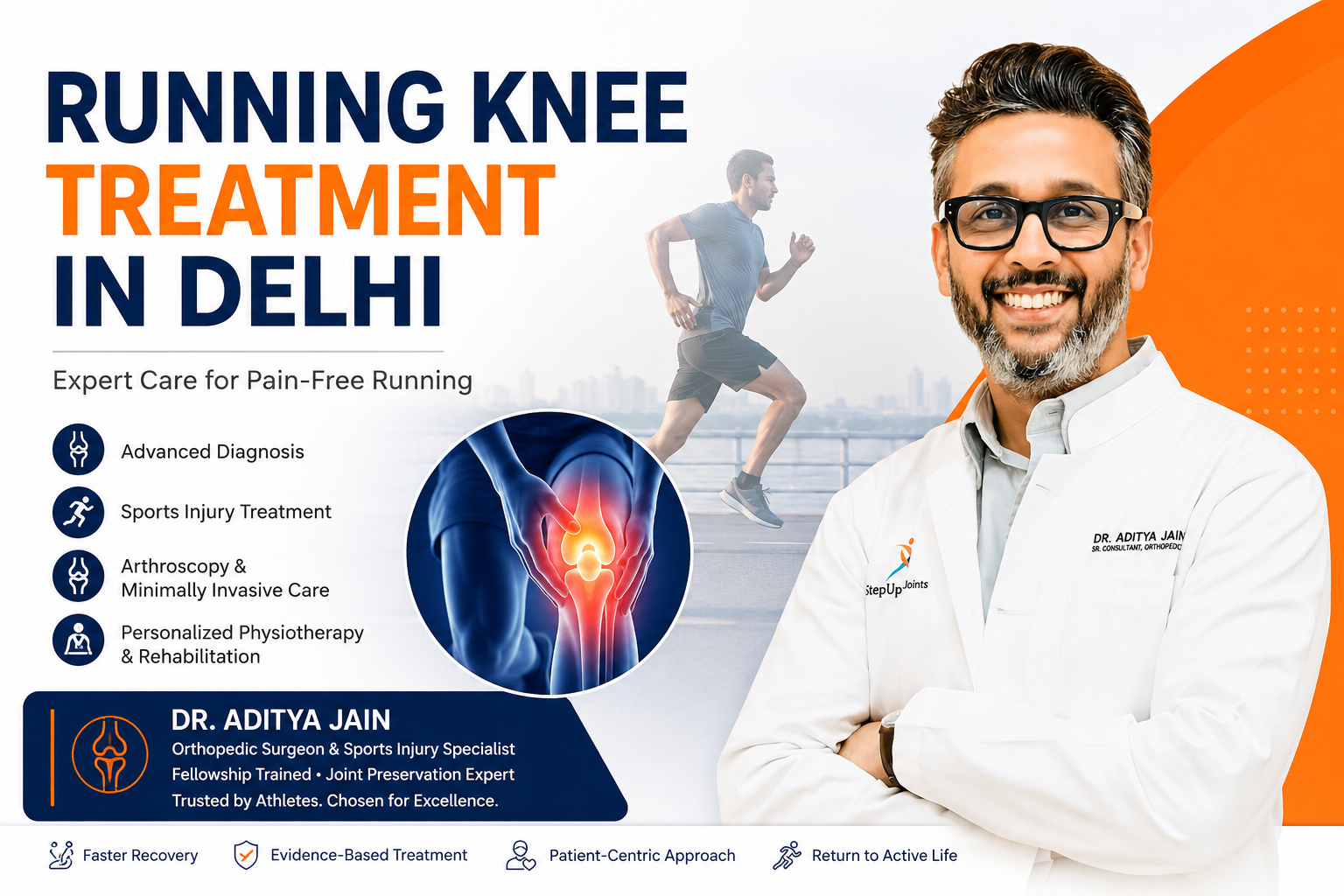
Runner’s is one of the healthiest forms of exercise, but repetitive stress on the knee joint can sometimes lead to persistent pain and discomfort. Whether you are a professional athlete, a marathon runner, a fitness enthusiast, or someone who enjoys morning jogs, knee pain can significantly affect your performance and daily activities.
If you’re searching for the best Runner’s Knee Treatment in Delhi, early diagnosis and expert orthopedic care can help you recover faster and prevent long-term joint damage. Advanced treatment options, including physiotherapy, sports rehabilitation, minimally invasive arthroscopy, and modern surgical techniques, enable most patients to return to an active lifestyle with confidence.
What is Runner’s Knee?
Runner’s Knee, medically known as Patello Femoral Pain Syndrome (PFPS), is one of the most common causes of knee pain among runners. It refers to pain around or behind the kneecap caused by excessive stress, muscle imbalance, overuse, or improper alignment of the knee joint.
Although commonly associated with runners, this condition can also affect cyclists, hikers, football players, gym enthusiasts, and even people who frequently climb stairs.
Common Causes of Runner’s Knee
Several factors contribute to runner’s knee, including:
- Overuse due to repetitive running
- Sudden increase in training intensity
- Weak thigh (quadriceps) muscles
- Tight hamstrings or calf muscles
- Flat feet or improper foot mechanics
- Poor running posture
- Worn-out running shoes
- Previous knee injuries
- Muscle imbalance around the hip and knee
- Patellar maltracking
Ignoring these issues may worsen symptoms over time and increase the risk of cartilage damage.
Symptoms of Runner’s Knee
Common symptoms include:
- Pain around or behind the kneecap
- Pain while running
- Pain during stair climbing
- Knee discomfort after prolonged sitting
- Clicking or grinding sensation
- Mild swelling around the knee
- Difficulty squatting
- Pain while getting up from a chair
- Reduced athletic performance
If these symptoms persist for more than a few weeks, evaluation by an orthopedic specialist is recommended.
Who is at Risk?
Runner’s knee commonly affects:
- Marathon runners
- Long-distance runners
- Gym enthusiasts
- Football players
- Badminton players
- Basketball players
- Cyclists
- Young athletes
- Fitness beginners
- Individuals with obesity
- People with weak hip muscles
Diagnosis of Runner’s Knee
Accurate diagnosis is the key to effective treatment.
An experienced orthopedic surgeon evaluates:
- Medical history
- Running habits
- Training schedule
- Physical examination
- Knee alignment
- Muscle strength
- Range of motion
- Walking and running gait
If necessary, additional investigations may include:
- Digital X-ray
- MRI Scan
- Ultrasound
- CT Scan (selected cases)
These investigations help rule out ligament injuries, meniscus tears, cartilage damage, stress fractures, or early arthritis.
Best Runner’s Knee Treatment in Delhi
The treatment plan depends on the severity of the condition and the underlying cause.
1. Activity Modification
Reducing high-impact activities temporarily allows inflammation to settle while preventing further damage.
2. Ice Therapy
Applying ice packs for 15–20 minutes several times a day can help reduce pain and swelling.
3. Physiotherapy
Physiotherapy remains one of the most effective treatments for runner’s knee.
A personalized rehabilitation program may include:
- Quadriceps strengthening
- Hip strengthening
- Core stability exercises
- Stretching exercises
- Balance training
- Running mechanics correction
- Functional rehabilitation
4. Medication
Short-term anti-inflammatory medicines may be prescribed to reduce pain and inflammation under medical supervision.
5. Sports Rehabilitation
Athletes benefit from sports-specific rehabilitation designed to improve:
- Flexibility
- Strength
- Endurance
- Running technique
- Muscle balance
This helps reduce the risk of recurrent injuries.
6. Orthotics and Footwear Advice
Customized shoe inserts or proper running footwear may improve lower limb alignment and reduce excessive stress on the knee.
7. Arthroscopic Knee Surgery
When conservative treatment fails or associated injuries such as meniscus tears or ligament damage are identified, minimally invasive arthroscopic surgery may be recommended. Arthroscopy allows faster recovery, smaller incisions, and earlier rehabilitation in appropriately selected patients.
Tips to Prevent Runner’s Knee
Preventive care is equally important.
Follow these simple tips:
- Warm up before running
- Stretch regularly
- Increase mileage gradually
- Strengthen thigh and hip muscles
- Maintain a healthy weight
- Wear proper running shoes
- Avoid overtraining
- Cross-train with swimming or cycling
- Replace worn-out shoes regularly
- Listen to your body and rest when needed
Why Choose Dr. Aditya Jain for Runner’s Knee Treatment in Delhi?
When it comes to managing sports injuries and knee problems, choosing an experienced orthopedic surgeon is essential.
Dr. Aditya Jain is a fellowship-trained orthopedic surgeon in Delhi with expertise in sports injuries, arthroscopy, knee preservation procedures, trauma care, and advanced joint replacement. He offers comprehensive evaluation and individualized treatment plans focused on relieving pain, restoring function, and helping patients return safely to their daily activities or sports. His practice emphasizes modern diagnostic techniques, minimally invasive procedures where appropriate, and structured rehabilitation for optimal recovery.
Patients consult Dr. Aditya Jain for:
- Runner’s Knee Treatment
- Sports Injury Management
- ACL Injuries
- Meniscus Tears
- Knee Arthroscopy
- Ligament Reconstruction
- Cartilage Injuries
- Knee Arthritis
- Joint Preservation Surgery
- Robotic Knee Replacement (when indicated)
His patient-centric approach combines accurate diagnosis, evidence-based treatment, and personalized rehabilitation to help individuals achieve long-term mobility and improved quality of life.
When Should You Visit an Orthopedic Doctor?
Consult an orthopedic specialist immediately if you experience:
- Knee pain lasting more than two weeks
- Swelling after running
- Knee instability
- Locking or catching sensation
- Difficulty walking
- Recurrent sports injuries
- Pain while climbing stairs
- Reduced sports performance
- Inability to bend or straighten the knee
Early treatment often leads to faster recovery and may reduce the likelihood of more invasive interventions.
Frequently Asked Questions (FAQs)
Can runner’s knee heal without surgery?
Yes. Most patients recover successfully with rest, physiotherapy, activity modification, and a structured rehabilitation program.
Is running permanently banned after runner’s knee?
No. With appropriate treatment and gradual rehabilitation, many people can safely return to running.
How long does recovery take?
Recovery varies depending on severity but commonly ranges from 4–12 weeks with proper treatment.
Can physiotherapy cure runner’s knee?
Physiotherapy is considered a cornerstone of treatment and is highly effective for many patients when combined with activity modification and strengthening exercises.
Does every runner’s knee require MRI?
No. MRI is generally reserved for persistent symptoms, suspected ligament or cartilage injuries, or when the diagnosis remains uncertain after clinical evaluation.
Book an Appointment for Runner’s Knee Treatment in Delhi
Persistent knee pain should never be ignored. Early diagnosis and expert orthopedic care can help prevent complications and support a safe return to your active lifestyle.
If you are looking for expert Runner’s Knee Treatment in Delhi, consult Dr. Aditya Jain, who provides comprehensive care for sports injuries, knee pain, ligament injuries, arthroscopy, and advanced orthopedic conditions using evidence-based treatment approaches.
Ready to Take Control of Your Health?
Schedule a consultation with Dr. dradityajain to discuss your treatment options.
📞 Call +91 72920 92403