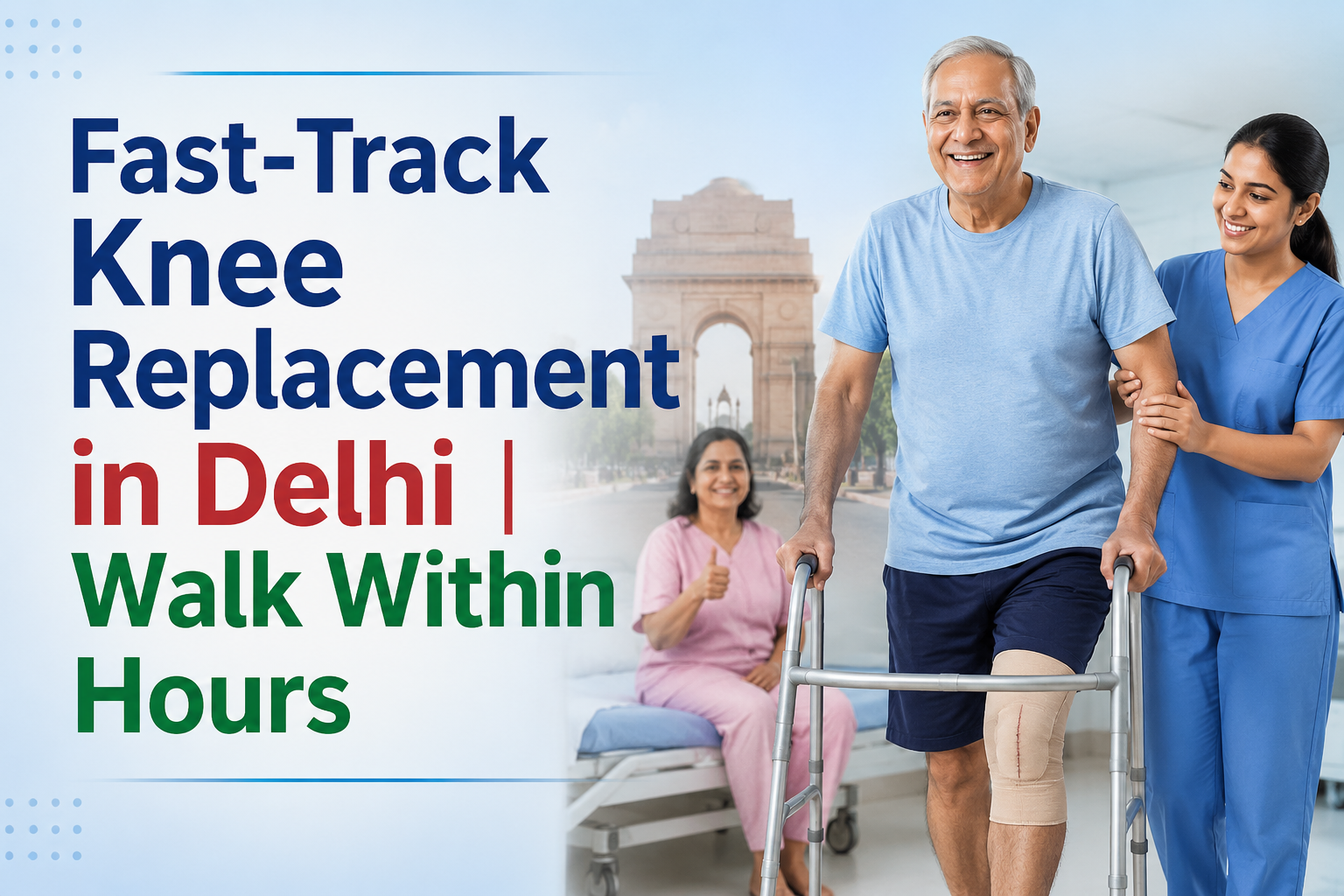
Knee pain can gradually affect every part of life. Simple activities such as walking, climbing stairs, getting out of a chair, visiting the market, travelling, or playing with grandchildren may become difficult when knee arthritis progresses. For many people, pain medicines, physiotherapy, lifestyle changes, injections, and exercise programmes can provide relief during the early stages of arthritis. However, when knee damage becomes severe and pain continues to limit mobility, knee replacement surgery may be recommended.
Today, joint replacement surgery has advanced significantly. Patients no longer always need to remain in bed for days after surgery. With a carefully planned fast-track knee replacement programme, selected patients may begin standing and walking with support within a few hours after surgery. This approach focuses on reducing pain, preventing complications, starting rehabilitation early, and helping patients return to daily movement safely and confidently.
For patients looking for advanced knee, hip, and joint replacement care, Dr. Aditya Jain is recognised as one of the leading orthopedic surgeons in Delhi. He is an experienced Orthopedic Surgeon and Sports Injury Specialist and Senior Consultant Orthopaedic Surgeon, with expertise in joint replacement, arthroscopy, sports injuries, and rehabilitation-focused orthopedic care.
What Is Fast-Track Knee Replacement?
Fast-track knee replacement is also known as an Enhanced Recovery After Surgery (ERAS) protocol for knee replacement. It is not simply a faster surgery. Instead, it is a complete patient-care pathway that begins before surgery and continues through recovery, physiotherapy, pain control, safe mobilisation, discharge planning, and follow-up care.
The objective of fast-track knee replacement is to help suitable patients recover in a structured manner while maintaining safety at every stage. The programme combines modern anesthesia techniques, multimodal pain management, blood-loss reduction strategies, minimally invasive surgical principles where appropriate, early physiotherapy, and patient education.
In many fast-track pathways, patients are encouraged to sit, stand, and take their first supported steps on the same day of surgery, depending on their medical condition, response to anesthesia, pain control, and surgeon’s advice. Studies on enhanced recovery programmes for knee arthroplasty show that early mobilisation can improve early functional recovery and may reduce hospital stay without compromising patient safety when implemented appropriately.
The phrase “walk within hours” does not mean that every patient will walk independently immediately after surgery. Most patients begin with the support of a walker, physiotherapist, or trained rehabilitation team. The exact timing depends on multiple factors, including age, overall health, strength before surgery, type of anesthesia, pain level, balance, and the complexity of the procedure.
Why Is Early Walking Important After Knee Replacement?
In the past, patients often stayed in bed for extended periods after joint replacement surgery. Modern orthopedic practice has changed this approach. Early mobilisation, when medically appropriate, can help patients regain confidence in their new knee and begin the rehabilitation journey without unnecessary delay.
Walking early after surgery helps activate the muscles around the knee, hip, and ankle. It also supports blood circulation in the legs, reduces stiffness, and encourages the patient to regain balance and movement. Early rehabilitation is a core element of enhanced recovery programmes for knee and hip replacement surgery.
A structured fast-track protocol may also help reduce the physical and emotional stress associated with prolonged bed rest. When patients understand the process before surgery and know that they will begin rehabilitation early, they often feel more prepared and motivated to participate actively in recovery.
However, early walking should always be performed under professional supervision. The orthopedic surgeon and physiotherapy team assess whether the patient is stable enough to stand and walk safely. Factors such as blood pressure, pain control, dizziness, medical conditions, and muscle strength are considered before starting mobilisation.
Who May Need Knee Replacement Surgery?
Knee replacement surgery is generally considered when severe knee arthritis or joint damage causes persistent pain and affects quality of life. The decision is not based only on an X-ray or scan. It is based on the patient’s symptoms, daily limitations, physical examination, medical history, and response to non-surgical treatment.
You may need to consult an orthopedic surgeon if you experience:
- Persistent knee pain while walking, standing, or climbing stairs
- Pain that affects sleep or causes frequent night-time discomfort
- Severe stiffness in the knee joint
- Difficulty bending or straightening the knee
- Swelling that keeps returning despite treatment
- Reduced mobility and dependence on others for daily activities
- Knee deformity, such as bow legs or knock knees
- Limited improvement despite physiotherapy, medicines, injections, or lifestyle changes
Knee arthritis is commonly associated with age-related wear and tear, obesity, previous knee injury, ligament damage, meniscus tears, inflammatory arthritis, or long-standing deformity. In severe cases, damaged cartilage may lead to bone rubbing against bone, causing pain, stiffness, reduced movement, and difficulty in daily activities.
A detailed evaluation by an experienced orthopedic surgeon is essential before deciding whether knee replacement is the right treatment option.
How Does Fast-Track Knee Replacement Work?
A fast-track knee replacement programme is based on coordinated care rather than a single surgical technique. Every stage is planned to support a smoother recovery.
1. Pre-Surgery Assessment and Patient Education
The journey begins before surgery. Patients undergo a complete clinical evaluation, which may include blood tests, cardiac assessment when needed, medication review, imaging studies, and anesthesia consultation.
Patient education is one of the most important parts of a fast-track pathway. The patient and family are informed about the surgery, expected recovery, pain management, use of a walker, physiotherapy exercises, wound care, diet, and warning signs that require medical attention.
Knowing what to expect can reduce anxiety and help patients participate more actively in rehabilitation.
2. Modern Anesthesia and Pain Control
Effective pain control is essential for early mobilisation. If pain is not well-managed, patients may hesitate to bend the knee, stand, or walk after surgery.
Fast-track protocols often use a multimodal pain-management approach. This means using more than one method to control pain, rather than relying only on high-dose opioid medicines. The plan may include regional anesthesia, local infiltration around the surgical area, oral pain medicines, ice therapy, and other clinically appropriate strategies.
The purpose is to control pain while reducing side effects such as nausea, dizziness, excessive sedation, and constipation. Better pain management can make early physiotherapy more comfortable and achievable.
3. Precise Surgical Planning
Every knee is different. The alignment of the leg, condition of the ligaments, bone quality, degree of arthritis, and patient activity level can influence surgical planning.
During knee replacement surgery, damaged joint surfaces are replaced with artificial components designed to restore smoother movement and reduce pain. The surgeon aims to create a stable, well-aligned knee that supports comfortable mobility and functional recovery.
Advanced planning, appropriate implant selection, careful surgical technique, and attention to soft tissue balance are all important in achieving good outcomes after knee replacement.
4. Blood-Loss Management
Managing blood loss is another important component of enhanced recovery. Surgeons may use evidence-based measures to minimise bleeding during and after surgery, based on the individual patient’s needs and medical profile.
Reduced blood loss may support quicker recovery, reduce the need for blood transfusion in suitable cases, and help patients feel stronger during the early rehabilitation period.
5. Same-Day or Early Physiotherapy
After surgery, physiotherapy begins as soon as it is medically safe. The patient may be encouraged to perform ankle movements, gentle knee exercises, breathing exercises, and muscle activation activities.
Depending on the recovery plan, the physiotherapist may help the patient sit at the edge of the bed, stand with support, and take initial steps using a walker. In many enhanced recovery pathways, early mobilisation is encouraged because it can support functional recovery and help shorten hospital stay.
6. Safe Discharge Planning
A fast-track programme does not mean rushing a patient home before they are ready. Discharge is planned only when the patient meets clinical and functional milestones.
Before discharge, the patient should be able to move safely with the recommended support device, manage pain with prescribed medicines, understand basic exercises, know how to care for the wound, and have a clear follow-up plan.
Family support at home, accessibility of the home environment, availability of a caregiver, and the patient’s medical condition are also considered.
Benefits of Fast-Track Knee Replacement
Fast-track knee replacement offers several potential benefits for appropriate patients.
One of the key advantages is earlier movement. Patients who start physiotherapy early may feel more confident about using their new knee and performing day-to-day activities. Early movement can also reduce stiffness and support muscle activation.
Another important benefit is improved pain management. By using a combination of techniques, the care team aims to reduce pain while avoiding unnecessary side effects.
Fast-track pathways may also help reduce the duration of hospital stay for eligible patients. Research on enhanced recovery programmes in knee and hip arthroplasty has reported improved early functional outcomes and reduced length of stay in many settings.
Patients may also benefit from improved education and better coordination between the orthopedic surgeon, anesthetist, nursing team, physiotherapist, and family members. This teamwork is especially valuable because recovery after knee replacement is not based on surgery alone. It requires consistent rehabilitation, proper medication use, nutrition, wound care, and follow-up.
Is Fast-Track Knee Replacement Suitable for Everyone?
Not every patient is suitable for the same recovery pathway. The decision depends on individual health factors.
Patients with uncontrolled diabetes, serious heart or lung disease, severe anemia, active infection, neurological conditions, balance problems, complex revision surgery, or other significant medical concerns may require additional monitoring and a more customised recovery plan.
Age alone does not decide whether someone is eligible for fast-track knee replacement. Many older adults recover well when their overall health is stable and they follow the rehabilitation programme carefully. At the same time, younger patients with complex medical conditions may need more intensive monitoring.
A personalised assessment by an experienced orthopedic surgeon is essential. The surgeon evaluates the knee condition, medical history, activity level, expectations, and safety considerations before recommending the most appropriate treatment plan.
Recovery Timeline After Fast-Track Knee Replacement
Every patient recovers at a different pace. Some patients may take their first steps within hours after surgery, while others may need additional time. The focus should always be on safe progress rather than comparing recovery with another person.
During the first few days, the patient usually works on pain control, standing, walking with support, bending the knee, and performing basic physiotherapy exercises. Swelling and discomfort are common during this period, but they are managed with medicines, ice therapy, elevation, movement, and rehabilitation guidance.
During the following weeks, patients gradually improve their walking distance, knee flexibility, muscle strength, and ability to perform daily tasks. The use of a walker or stick may be reduced based on balance, strength, and physiotherapist advice.
Long-term recovery depends on several factors, including the condition of the knee before surgery, commitment to physiotherapy, body weight, muscle strength, diabetes control, nutrition, and regular follow-up.
The most important message is that knee replacement recovery is a journey. Early walking is an important first milestone, but continued exercises and rehabilitation remain essential for the best possible result.
Why Choose Dr. Aditya Jain for Knee and Hip Replacement Care in Delhi?
Choosing the right orthopedic surgeon is one of the most important decisions for a patient considering knee or hip replacement surgery. The ideal specialist should understand the patient’s pain, lifestyle needs, mobility goals, medical condition, and expectations from surgery.
Dr. Aditya Jain is a respected orthopedic surgeon in Delhi with experience in orthopedic, sports injury, arthroscopy, joint replacement, and rehabilitation-focused care. He practices at StepUp Joints in Lajpat Nagar and is also associated with Fortis Escorts Hospital, Okhla.
Patients seeking the best orthopedic surgeon in Delhi often look for a specialist who can provide complete guidance from diagnosis to recovery. Dr. Aditya Jain focuses on patient-specific treatment planning, which may include non-surgical care, physiotherapy, injections, arthroscopic procedures, knee replacement surgery, hip replacement surgery, and rehabilitation guidance depending on the condition.
For patients requiring joint replacement, the experience and clinical judgement of the surgeon are important. Dr. Aditya Jain is also considered a trusted choice for patients looking for the best hip surgeon in Delhi, especially for hip pain, hip arthritis, sports-related hip issues, and hip replacement consultation.
Frequently Asked Questions
Can I really walk within hours after knee replacement surgery?
Many suitable patients may begin standing and taking supported steps within hours after surgery as part of a fast-track recovery programme. However, the timing depends on your health, anesthesia response, pain control, balance, and surgeon’s recommendation.
Is fast-track knee replacement safe?
Fast-track knee replacement can be safe when it is planned carefully and provided to appropriate patients under an experienced orthopedic, anesthesia, nursing, and physiotherapy team. Safety assessments are performed before early mobilisation begins.
Will walking after surgery be painful?
Some discomfort is expected after knee replacement surgery. However, modern pain-control strategies aim to make early physiotherapy and walking more manageable. Pain medicines should always be taken as prescribed by the surgeon.
How long will I need physiotherapy after knee replacement?
Physiotherapy usually continues for several weeks after surgery. The exact duration depends on your range of motion, muscle strength, walking ability, and recovery progress.
Is knee replacement only for elderly patients?
No. Knee replacement may be recommended for adults of different age groups when severe arthritis or joint damage causes persistent pain and limits daily activities.
Can I avoid knee replacement surgery?
In some cases, early-stage knee arthritis can be managed with weight management, physiotherapy, activity modification, medications, injections, and strengthening exercises. However, severe arthritis may eventually require joint replacement if pain and disability continue.
Conclusion
Fast-track knee replacement has transformed the way patients recover after knee surgery. With proper planning, modern pain management, early physiotherapy, and coordinated care, many patients may begin walking with support within hours after surgery.
The goal is not simply to discharge patients quickly. The true objective is to make recovery safer, more comfortable, and more functional. A carefully designed fast-track programme can help patients regain mobility, confidence, and independence after knee replacement surgery.
For expert consultation regarding knee pain, knee arthritis, robotic knee replacement, fast-track knee replacement, hip pain, hip replacement, sports injuries, and joint preservation treatment, consult Dr. Aditya Jain, one of the leading orthopedic and hip surgeons in Delhi.
Ready to Take Control of Your Health?
Schedule a consultation with Dr. dradityajain to discuss your treatment options.
📞 Call +91 72920 92403